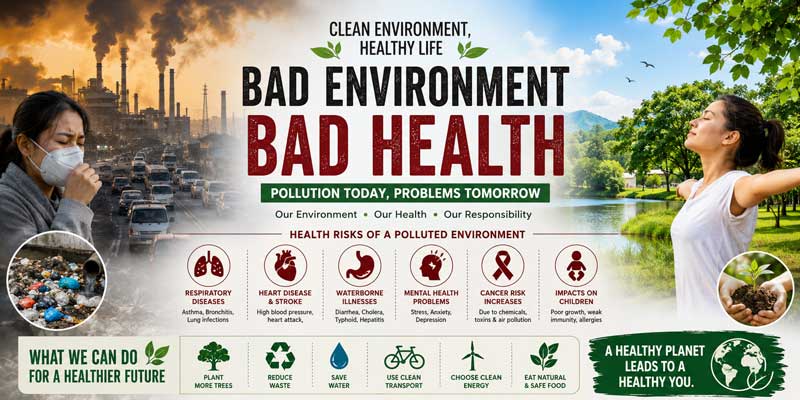
The environment we live in plays a crucial role in our overall health and well-being. Clean air, safe drinking water, healthy soil, and green surroundings are essential for a healthy life. However, rapid industrialization, urbanization, deforestation, plastic pollution, and climate change have severely degraded our environment.
Today, millions of people around the world suffer from illnesses directly or indirectly caused by environmental pollution. From respiratory diseases and heart problems to mental stress and cancer, the consequences of living in a polluted environment are becoming increasingly serious.
Protecting the environment is no longer just about saving nature—it is about protecting human life.
What Is Environmental Pollution?
Environmental pollution occurs when harmful substances contaminate the natural environment.
The major types include:
- 🌫 Air pollution
- 💧 Water pollution
- 🌍 Soil pollution
- 🔊 Noise pollution
- 💡 Light pollution
- ☢ Chemical pollution
Each type affects human health in different ways.
1. Air Pollution and Respiratory Diseases
Air pollution is considered one of the world’s largest environmental health risks.
Common pollutants include:
- Fine particulate matter (PM2.5 and PM10)
- Carbon monoxide
- Sulfur dioxide
- Nitrogen oxides
- Ground-level ozone
- Smoke from vehicles and industries
Health Effects
Breathing polluted air can cause:
- Asthma
- Chronic bronchitis
- COPD (Chronic Obstructive Pulmonary Disease)
- Lung infections
- Lung cancer
- Reduced lung function
- Allergies
Children and older adults are especially vulnerable.
2. Heart Disease and Stroke
Air pollution doesn’t only affect the lungs.
Tiny particles enter the bloodstream and increase the risk of:
- High blood pressure
- Heart attacks
- Stroke
- Irregular heartbeat
- Blood vessel damage
Long-term exposure significantly increases cardiovascular disease risk.
3. Unsafe Drinking Water
Contaminated water spreads many dangerous diseases.
Pollutants include:
- Sewage
- Industrial chemicals
- Heavy metals
- Agricultural pesticides
- Microplastics
Health Problems
- Diarrhea
- Cholera
- Typhoid
- Hepatitis
- Kidney damage
- Liver diseases
Clean drinking water is one of the most important foundations of public health.
4. Soil Pollution and Food Safety
Healthy soil produces healthy food.
When soil becomes contaminated with:
- Heavy metals
- Pesticides
- Chemical fertilizers
- Industrial waste
Those contaminants can enter fruits, vegetables, and grains.
This may contribute to:
- Digestive disorders
- Hormonal imbalance
- Developmental problems in children
- Long-term toxicity
5. Climate Change and Human Health
Climate change affects health in many indirect ways.
Examples include:
- Heat waves
- Droughts
- Floods
- Wildfires
- Food shortages
These events increase:
- Heat stroke
- Dehydration
- Malnutrition
- Injuries
- Infectious diseases
6. Mental Health and Environmental Degradation
Living in polluted, noisy, and overcrowded environments affects emotional well-being.
Studies have linked poor environmental conditions with:
- Anxiety
- Depression
- Chronic stress
- Sleep disorders
- Reduced concentration
On the other hand, spending time in nature has been shown to improve mood and reduce stress.
7. Plastic Pollution and Microplastics
Plastic waste breaks down into tiny particles called microplastics.
These particles have been found in:
- Drinking water
- Seafood
- Salt
- Fruits and vegetables
- Even human blood and organs
Scientists are still studying their long-term effects, but there are concerns about inflammation, hormone disruption, and other health impacts.
8. Chemical Exposure
Many household and industrial chemicals can affect human health.
Examples include:
- Cleaning chemicals
- Pesticides
- Paints
- Industrial solvents
Long-term exposure may contribute to:
- Skin diseases
- Hormonal disorders
- Fertility problems
- Neurological disorders
- Certain cancers
Always use chemicals responsibly and safely.
9. Noise Pollution
Constant exposure to loud noise from:
- Traffic
- Construction
- Factories
- Loudspeakers
can lead to:
- Hearing loss
- Stress
- Sleep disturbances
- High blood pressure
- Reduced productivity
Quiet environments support better physical and mental health.
10. Loss of Green Spaces
Urbanization often replaces parks and forests with concrete buildings.
Fewer trees mean:
- Poorer air quality
- Higher temperatures
- Less biodiversity
- Fewer opportunities for exercise and recreation
Green spaces improve both physical and mental health.
Who Is Most at Risk?
Some groups are more vulnerable to environmental pollution:
- 👶 Children
- 👵 Elderly people
- 🤰 Pregnant women
- ❤️ People with heart disease
- 😷 Individuals with respiratory illnesses
- 👷 Outdoor workers
Protecting these groups should be a public health priority.
What Can We Do to Protect Ourselves?
While large-scale environmental change requires government and industry action, individuals can also make a difference.
At Home
- Use clean cooking methods.
- Reduce plastic use.
- Save electricity and water.
- Compost kitchen waste.
- Plant trees and native plants.
- Avoid burning waste.
Personal Health
- Wear masks during periods of poor air quality.
- Drink clean, filtered water.
- Wash fruits and vegetables thoroughly.
- Exercise in parks or during times when air pollution is lower.
- Eat a balanced diet rich in fruits and vegetables.
How Protecting Nature Protects Human Health
Every environmental action has a health benefit.
| Environmental Action | Health Benefit |
| Planting trees | Cleaner air and cooler temperatures |
| Rainwater harvesting | Better water security |
| Composting | Less landfill waste and healthier soil |
| Sustainable farming | Healthier food and fewer chemicals |
| Reducing plastic | Cleaner oceans and safer ecosystems |
| Using public transport | Less air pollution and lower emissions |
A Shared Responsibility
Governments, businesses, schools, and individuals all have a role to play.
Communities can:
- Organize clean-up drives.
- Plant native trees.
- Promote recycling.
- Support sustainable farming.
- Educate children about environmental conservation.
Small actions, when multiplied across millions of people, create lasting change.
Conclusion
The health of our planet and the health of humanity are deeply connected. Every breath we take, every glass of water we drink, and every meal we eat depends on a healthy environment.
By reducing pollution, conserving natural resources, and adopting sustainable lifestyles, we can build healthier communities and ensure a better future for generations to come.
A healthy environment is not a luxury—it is a basic requirement for a healthy life. Protect nature today, and you protect yourself, your family, and future generations. 🌍💚