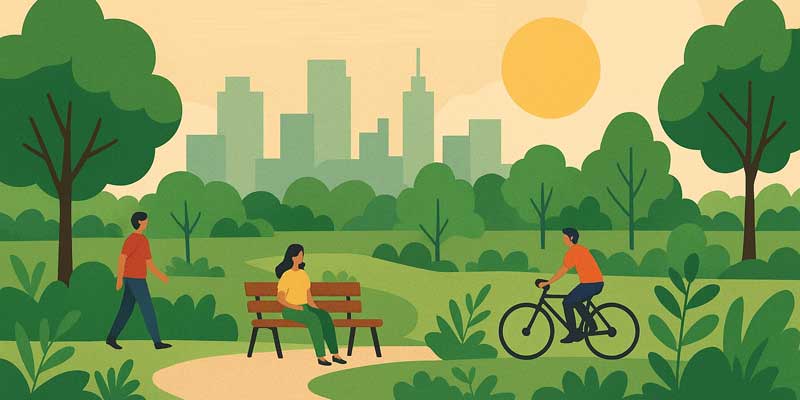
In the midst of growing concrete jungles, urban green spaces — parks, gardens, green roofs, and urban forests — have become the lungs of our cities. They are not just places for relaxation but essential ecosystems that sustain life, improve health, and mitigate the effects of climate change. As urbanization expands rapidly, creating and maintaining green spaces has become a necessity rather than a luxury.
What Are Urban Green Spaces?
Urban green spaces refer to natural or planted areas within cities that are covered with vegetation. These include:
- Public parks and community gardens
- Tree-lined streets and green corridors
- Urban forests and wetlands
- Green roofs and vertical gardens
- School and institutional gardens
Each of these spaces plays a vital role in improving the quality of urban life and restoring balance between nature and development.
1. Environmental Benefits
🌳 Cleaner Air
Trees and plants absorb pollutants like carbon dioxide, nitrogen oxides, and particulate matter, improving air quality and reducing urban smog.
🌦 Climate Regulation
Green spaces help reduce the urban heat island effect, where cities become hotter due to concrete and asphalt surfaces. They also help maintain local humidity and temperature balance.
💧 Rainwater Management
Parks and vegetated areas absorb rainwater, reducing urban flooding, improving groundwater recharge, and filtering pollutants before they reach rivers and lakes.
2. Health and Well-being
❤️ Physical Health
Access to parks encourages walking, jogging, cycling, and outdoor sports — promoting physical fitness and reducing risks of obesity, heart disease, and diabetes.
🧘 Mental Health
Nature has a calming effect. Green environments help lower stress, anxiety, and depression levels while improving focus and creativity.
👶 Social Health
Parks and community gardens become meeting points for people from diverse backgrounds — strengthening community bonds and fostering social inclusion.
3. Economic and Social Impact
- Properties near green spaces often have higher real estate value.
- Parks attract tourists and local businesses, boosting local economies.
- Urban gardens can produce fresh food, reducing grocery expenses and supporting urban farming movements.
4. Biodiversity in Cities
Urban green spaces provide habitats for birds, insects, and small mammals, supporting biodiversity within city limits. Even small patches of greenery can serve as critical stepping stones for migrating species.
5. Educational and Recreational Opportunities
Schools and communities can use green areas for environmental education, teaching children about sustainability, ecosystems, and the importance of conservation.
Recreational facilities in parks also provide safe spaces for sports, leisure, and cultural activities.
6. Urban Green Planning: How Cities Can Improve
🌱 Increase Tree Canopy Cover
Encourage the planting of native trees along roads and in public spaces.
🏡 Promote Green Roofs and Vertical Gardens
These innovative solutions maximize greenery in limited urban spaces.
🏞 Revitalize Vacant Lots
Transform unused land into community gardens or mini-forests.
🚌 Integrate Green Corridors
Connect parks through tree-lined streets and pedestrian pathways to form continuous green networks.
🧑🤝🧑 Engage Communities
Citizen participation in maintaining and protecting green spaces ensures long-term sustainability.
7. Successful Examples Around the World
- Singapore: Known as the “City in a Garden,” it integrates greenery into architecture, with vertical gardens and rooftop parks.
- New York City’s High Line: A former railway transformed into an elevated park filled with plants, art, and walking trails.
- Curitiba, Brazil: A model city for sustainable urban planning with vast parks and recycling programs.
Conclusion
Urban green spaces are not just aesthetic features — they are essential for sustainable urban living. They clean our air, cool our cities, and connect people with nature.
As we face challenges like pollution, mental stress, and climate change, expanding urban greenery is a simple yet powerful way to restore harmony between humans and the planet.
Let’s reimagine our cities — not as gray expanses of concrete but as living ecosystems that breathe, grow, and nurture all forms of life.