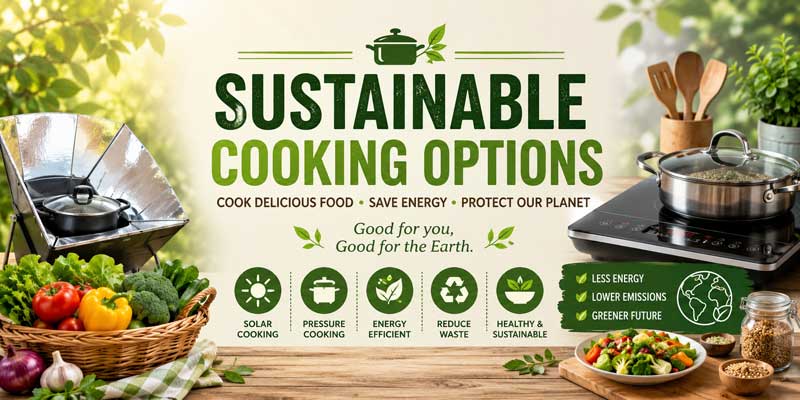
Cooking is an essential part of our daily lives, but the way we prepare food can significantly impact the environment. Traditional cooking methods often consume large amounts of fuel, electricity, and water and produce unnecessary waste. Fortunately, there are many eco-friendly cooking options that not only help protect the planet but can also save money, improve health, and increase energy efficiency.
Sustainable cooking is about choosing methods, tools, and habits that reduce environmental harm while making nutritious meals for ourselves and our families.
🌱 Why Sustainable Cooking Matters
Cooking affects the environment through:
- Fuel and electricity consumption
- Carbon emissions
- Food waste
- Plastic packaging
- Water usage
- Indoor air pollution
By adopting greener cooking methods, we can:
- Reduce carbon footprint
- Save natural resources
- Improve air quality
- Minimize waste
- Support healthier lifestyles
🔥 1. Solar Cooking – Using the Sun’s Energy
One of the most eco-friendly cooking methods is solar cooking.
How It Works
Solar cookers use sunlight to generate heat for cooking food.
Benefits
- No fuel required
- Zero emissions
- Reduces deforestation caused by firewood
- Saves money on gas and electricity
Best For
- Rice
- Vegetables
- Lentils
- Slow-cooking meals
Types of Solar Cookers
- Box solar cooker
- Panel cooker
- Parabolic solar cooker
🌞 Solar cooking is especially useful in sunny regions and rural communities.
⚡ 2. Energy-Efficient Electric Cooking
Modern electric appliances can significantly reduce energy use.
Eco-Friendly Options
- Induction cooktops
- Electric pressure cookers
- Air fryers
- Slow cookers
Why Induction Cooking is Better
Induction stoves heat cookware directly, reducing energy waste and cooking faster than traditional gas stoves.
Benefits
- Lower energy consumption
- Faster cooking
- Safer and cleaner indoor air
- Reduced greenhouse gas emissions when powered by renewable energy
🍲 3. Pressure Cooking – Saving Fuel and Time
Pressure cookers are one of the simplest sustainable cooking tools.
Advantages
- Uses less gas or electricity
- Reduces cooking time by up to 70%
- Preserves nutrients in food
Perfect for:
- Beans
- Lentils
- Rice
- Soups
A pressure cooker can dramatically reduce household energy consumption over time.
🌿 4. Biomass and Biogas Cooking
In rural and eco-conscious communities, biomass and biogas are sustainable alternatives.
Biogas Systems
Biogas is produced from:
- Kitchen waste
- Animal waste
- Organic matter
The gas generated can be used for cooking.
Environmental Benefits
- Reduces organic waste
- Produces renewable fuel
- Lowers methane emissions
- Creates nutrient-rich slurry for farming
🥘 5. Improved Cookstoves
Traditional wood-burning stoves create smoke and consume large amounts of wood.
Improved eco-stoves:
- Burn fuel more efficiently
- Produce less smoke
- Require less firewood
Benefits
- Better indoor air quality
- Lower deforestation
- Reduced health risks for women and children
🥗 6. Eating More Raw and Fresh Foods
Not all food needs cooking.
Including more:
- Fruits
- Salads
- Sprouts
- Raw vegetables
can reduce energy consumption while providing healthy nutrients.
This also supports:
- Minimal processing
- Lower packaging waste
- Healthier diets
💧 7. Water-Efficient Cooking Practices
Cooking can waste large amounts of water if not managed carefully.
Sustainable Water Habits
- Steam vegetables instead of boiling
- Reuse vegetable washing water for plants
- Use measured amounts of water
- Cover pots while cooking
These small actions save both water and energy.
♻️ 8. Reducing Food Waste in the Kitchen
Food waste is a major environmental issue.
Smart Cooking Habits
- Plan meals in advance
- Store food properly
- Use leftovers creatively
- Compost kitchen waste
Examples:
- Vegetable peels → compost
- Leftover rice → fried rice
- Stale bread → breadcrumbs
Reducing food waste lowers methane emissions from landfills.
🌾 9. Choosing Local and Seasonal Ingredients
Locally grown food requires:
- Less transportation
- Less refrigeration
- Less packaging
Seasonal foods are usually:
- Fresher
- More nutritious
- More environmentally friendly
Supporting local farmers also strengthens sustainable food systems.
🍃 10. Sustainable Kitchen Tools and Materials
Eco-friendly kitchens avoid excessive plastic and disposable items.
Better Alternatives
- Stainless steel containers
- Glass jars
- Wooden utensils
- Cloth napkins
- Reusable food wraps
These reduce long-term waste and pollution.
🌍 The Connection Between Cooking and Climate Change
Cooking may seem small, but globally it contributes significantly to:
- Carbon emissions
- Deforestation
- Air pollution
- Waste generation
Millions of households making greener cooking choices can collectively create a massive positive environmental impact.
🧑🍳 Simple Sustainable Cooking Tips for Everyday Life
- ✅ Cook in batches
- ✅ Keep lids on pots
- ✅ Use energy-efficient appliances
- ✅ Avoid single-use plastics
- ✅ Compost food scraps
- ✅ Buy local produce
- ✅ Use reusable kitchen items
- ✅ Turn off appliances when not in use
Small changes in daily cooking habits can help make the planet greener.
Conclusion
Sustainable cooking is about more than preparing meals—it’s about caring for the Earth while nourishing ourselves. From solar cookers and induction stoves to composting and reducing food waste, there are many ways to make our kitchens more environmentally friendly.
By adopting eco-conscious cooking practices, we not only protect natural resources but also create healthier homes and communities.
🌱 Every meal is an opportunity to make a positive impact on the planet.