

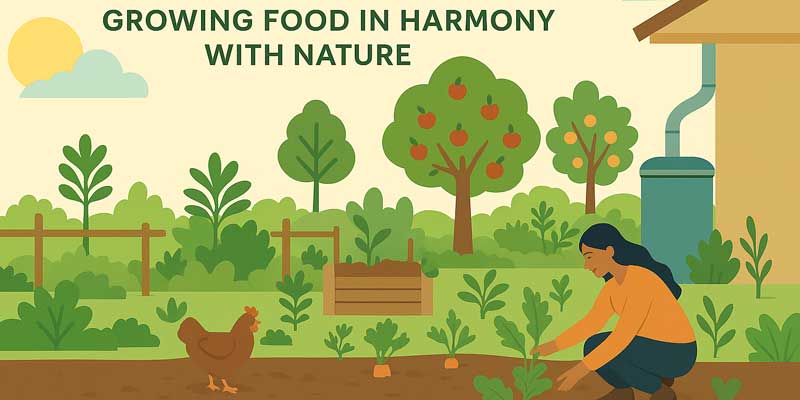
In today’s fast-paced world, modern agriculture often prioritizes short-term yields over long-term sustainability. The result? Soil depletion, excessive use of chemical fertilizers, and loss of biodiversity. But there’s a solution rooted in nature itself—Permaculture.
Permaculture is more than just farming—it’s a holistic design system that works in harmony with natural ecosystems to grow food sustainably, regenerate land, and foster resilient communities. It’s about living in harmony with the Earth while meeting our daily needs.
What is Permaculture?
The term Permaculture combines “permanent” and “agriculture”, but it also extends to “permanent culture.” Developed in the 1970s by Bill Mollison and David Holmgren, it focuses on design principles inspired by nature.
Permaculture is not about monocropping or industrial farming—it’s about diversity, balance, and sustainability.
The Ethics of Permaculture
At the heart of permaculture are three guiding ethics:
- Earth Care 🌍 – Protect and regenerate natural systems.
- People Care 👨👩👧 – Ensure human needs are met fairly.
- Fair Share ⚖️ – Redistribute surplus and reduce waste.
These ethics form the foundation of all permaculture practices.
Key Principles of Permaculture
Permaculture design follows 12 core principles, some of which include:
- Observe and Interact: Learn from nature before taking action.
- Harness and Store Energy: Utilize solar, wind, and water resources efficiently.
- Obtain a Yield: Ensure efforts result in food, energy, or other useful outputs.
- Use and Value Diversity: Just like natural ecosystems, diverse farms are stronger and more resilient.
- Produce No Waste: Turn waste into resources through composting and recycling.
Techniques in Permaculture Farming
1. Food Forests 🌳
Multi-layered systems where fruit trees, shrubs, herbs, and vegetables grow together, mimicking a natural forest.
2. Companion Planting 🌱
Certain plants benefit each other when grown together (e.g., corn, beans, and squash—the “Three Sisters” method).
3. Water Harvesting 💧
Using swales, ponds, and rainwater harvesting to conserve water and reduce irrigation needs.
4. Soil Regeneration 🌿
Practices like mulching, cover cropping, and composting restore soil fertility naturally.
5. Integrated Animal Systems 🐓
Chickens, ducks, and bees play roles in pest control, pollination, and fertilization.
Benefits of Permaculture
Environmental Benefits
- Restores soil health
- Increases biodiversity
- Conserves water and energy
Health Benefits
- Provides organic, chemical-free food
- Encourages outdoor activity and connection with nature
Economic Benefits
- Reduces dependency on external inputs (fertilizers, pesticides)
- Creates resilient local food systems
Permaculture in Daily Life
You don’t need acres of land to practice permaculture. Here are simple ways to apply its principles:
- Grow vegetables and herbs in your backyard or balcony.
- Use kitchen waste for composting.
- Collect and reuse rainwater.
- Plant trees that provide shade, food, and habitats for birds.
- Support local farmers practicing sustainable agriculture.
Conclusion
Permaculture is not just farming—it’s a lifestyle of respect and cooperation with nature. By designing systems that work with natural cycles, we can grow abundant food, heal degraded land, and build healthier communities.
🌱 The future of food is sustainable, regenerative, and deeply connected to the Earth. Permaculture shows us the way.