
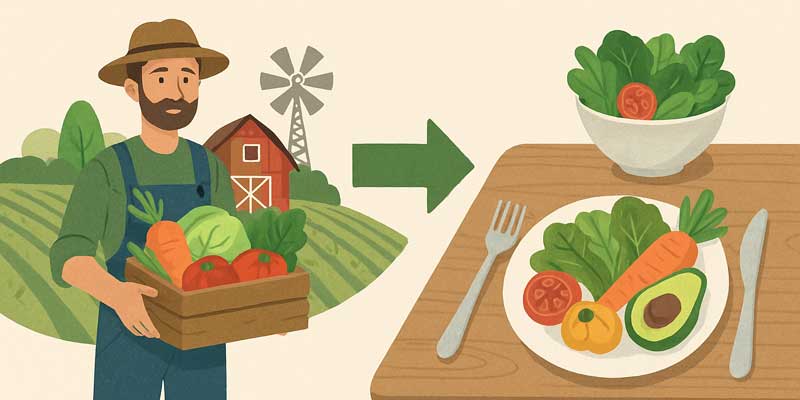
Food sustainability is about producing, distributing, and consuming food in ways that protect the environment, support farmers, and promote human health—today and for future generations. One of the most effective approaches to food sustainability is the farm-to-table movement, which emphasizes locally grown, seasonal, and responsibly produced food.
In a world facing climate change, soil degradation, food waste, and health challenges, rethinking how our food travels from farms to our plates has never been more important.
What Is Food Sustainability?
Food sustainability focuses on creating a food system that is:
- 🌱 Environmentally responsible
- 👩🌾 Economically viable for farmers
- 🧑🤝🧑 Socially fair and accessible
- 🍎 Nutritionally healthy for consumers
It considers the entire food lifecycle—from farming practices and transportation to consumption and waste management.
Understanding the Farm-to-Table Concept
Farm-to-table means food reaches consumers directly from local farms with minimal processing, storage, and transportation.
Key principles include:
- Local sourcing
- Seasonal eating
- Transparent supply chains
- Respect for farmers and nature
This approach shortens the distance food travels, often referred to as “food miles”, making the system more sustainable and efficient.
Why Farm to Table Matters for the Environment
🌍 Reduced Carbon Footprint
- Long-distance transportation of food increases greenhouse gas emissions.
- Local food reduces fuel use and air pollution.
🌾 Healthier Soil and Biodiversity
- Small-scale and organic farms often use crop rotation, composting, and natural pest control.
- These practices improve soil fertility and protect pollinators.
💧 Efficient Water Use
- Sustainable farms adopt drip irrigation, rainwater harvesting, and soil moisture retention methods.
Benefits for Farmers and Local Economies
👩🌾 Fair Income for Farmers
- Direct sales eliminate middlemen.
- Farmers receive better prices for their produce.
🏡 Stronger Local Communities
- Money spent locally circulates within the community.
- Encourages rural development and employment.
🌱 Preservation of Traditional Farming Knowledge
- Supports indigenous crops, seeds, and sustainable practices passed down through generations.
Health Benefits of Farm-to-Table Food
🍎 Fresher and More Nutritious
- Food harvested locally retains more vitamins and minerals.
- Less need for preservatives and chemicals.
🥗 Encourages Balanced Diets
- Seasonal eating promotes diversity in meals.
- Reduces dependency on ultra-processed foods.
🧠 Better Mental Well-being
- Knowing where your food comes from builds trust and mindful eating habits.
Food Waste and Sustainability
A major issue in modern food systems is food waste.
Farm-to-table systems help reduce waste by:
- Harvesting based on real demand
- Selling “imperfect” produce locally
- Encouraging composting of kitchen waste
Organic waste can be turned into compost, returning nutrients back to the soil and closing the food loop.
How Consumers Can Support Farm-to-Table Sustainability
You don’t need to live on a farm to make a difference.
✅ Practical Steps You Can Take:
- Buy from local farmers’ markets
- Support community-supported agriculture (CSA) programs
- Grow herbs or vegetables at home
- Choose seasonal and regional foods
- Reduce food waste and compost kitchen scraps
- Ask restaurants about their food sourcing
Every conscious choice contributes to a more sustainable food system.
Role of Restaurants and Businesses
Restaurants play a key role by:
- Sourcing ingredients locally
- Highlighting seasonal menus
- Reducing food waste
- Educating customers about sustainable food
Many farm-to-table restaurants also support ethical labor practices and zero-waste kitchens.
Challenges in Farm-to-Table Systems
While powerful, the model faces challenges:
- Limited availability in urban areas
- Higher costs for some organic products
- Lack of awareness among consumers
- Infrastructure and storage limitations
However, community support and policy initiatives can overcome these barriers.
Conclusion
Food sustainability and the farm-to-table movement offer a hopeful path toward a healthier planet and population. By reconnecting people with the source of their food, we create systems that respect nature, honor farmers, and nourish communities.
Choosing farm-to-table isn’t just a food trend—it’s a lifestyle choice that supports environmental conservation, economic fairness, and personal well-being.
🌱 When we eat sustainably, we vote for the future—one meal at a time.