

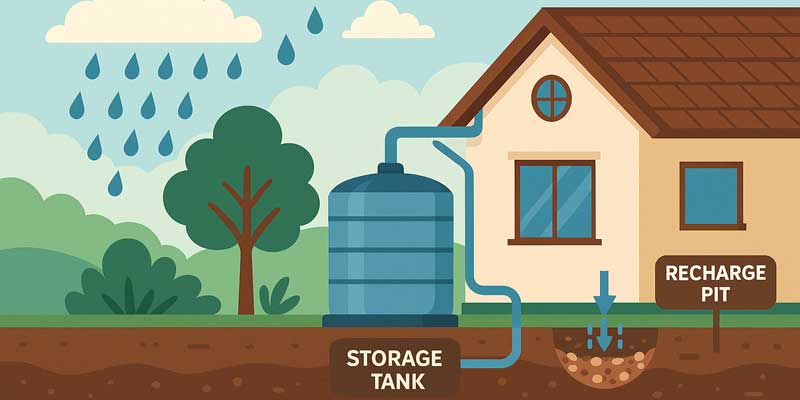
Water is one of Earth’s most vital natural resources, yet it’s becoming increasingly scarce in many parts of the world, including India. With erratic rainfall, over-extraction of groundwater, and growing urbanization, water shortages are a growing concern. The good news is: we can turn the problem into a solution—with rainwater harvesting.
Rainwater harvesting is an ancient yet highly effective method of collecting and storing rainwater for later use. It’s cost-effective, environmentally friendly, and easy to implement at home, in schools, or even in large communities.
What is Rainwater Harvesting?
Rainwater harvesting (RWH) is the collection and storage of rain, typically from rooftops, paved areas, or ground surfaces, which is then used for purposes like irrigation, washing, or even drinking (after purification).
Why Rainwater Harvesting is Important
1. Reduces Water Bills
By storing rainwater, you reduce your dependence on municipal supply or groundwater.
2. Conserves Groundwater
It prevents over-extraction and allows aquifers to recharge naturally.
3. Helps During Droughts
Harvested water can be used when there’s little or no rainfall, ensuring continuity of water supply.
4. Prevents Urban Flooding
By capturing rainwater, you reduce surface runoff, lowering the chances of waterlogging and floods.
5. Improves Soil Health
Used in gardens or farms, rainwater—free from chlorine and chemicals—is excellent for plant health.
Types of Rainwater Harvesting Systems
1. Rooftop Rainwater Harvesting
Rain is collected from roofs and directed into tanks, sumps, or recharge pits using pipes and filters.
2. Surface Runoff Harvesting
Rainwater running over land surfaces is diverted into wells, ponds, or recharge pits.
3. Recharge Pits & Trenches
Used to channel rainwater directly into the ground to replenish groundwater tables.
4. Percolation Tanks
Small earthen dams are built to capture and allow rainwater to seep into the soil.
Key Components of a Rainwater Harvesting System
- Catchment Area: Usually, rooftops or paved areas.
- Conveyance System: Gutters and downpipes to direct water.
- Filter Unit: Sand, gravel, or mesh filters to remove debris.
- Storage Tanks or Recharge Pits: To store or percolate water.
How to Implement Rainwater Harvesting at Home
- Assess Rooftop Area: Larger rooftops mean more water capture.
- Install Gutters and Downpipes: Direct water into a storage tank.
- Set Up a Basic Filter: Sand, charcoal, or mesh to filter debris.
- Use a Storage Tank: Install a tank based on expected rainfall and usage.
- Optional – Recharge Pit: Let overflow water recharge the ground.
💧 Tip: 100 sq. m of rooftop area with 1000 mm rainfall can yield 1 lakh liters of water annually!
Government Support and Initiatives
- Many Indian states offer subsidies for installing rainwater harvesting systems.
- Urban buildings in several cities like Delhi, Chennai, and Bangalore are required by law to have RWH systems.
- NGOs and schools are promoting awareness in rural and urban areas.
Challenges and Solutions
| Challenge | Solution |
| Poor maintenance | Regularly clean tanks and filters |
| Lack of awareness | Conduct workshops and awareness drives |
| Initial cost | Government subsidies and low-cost DIY systems |
Conclusion
Rainwater harvesting is more than a water conservation technique—it’s a path to self-reliance, sustainability, and ecological responsibility. By implementing it in our homes, schools, and communities, we ensure water availability for ourselves and future generations.
🌿 It’s time to respect the rain and harvest it wisely.